Fashion Retail's SEO Crisis: The AI Disruption
Fashion brands have a serious disconnect with their customers. While 79% of these brands think they offer excellent website search experience, only 63% of consumers share this view. This gap shows retailers don't fully understand how their SEO AI and search optimization efforts impact customers.
Google processes 5.9 million searches every minute. AI in SEO has become essential for fashion retailers to survive in today's market. Since 2019, the industry has invested $1.7 billion in search-as-a-service startups. Despite this massive investment, many fashion brands still aren't ready for the upcoming AI-driven search transformation.
Fashion retailers face unique challenges in this changing landscape. This piece explains what's at risk and helps you prepare your business for these inevitable changes. You'll learn about the hidden SEO crisis affecting fashion retailers and get practical steps to strengthen your online visibility.
The ground has moved again since this piece was first published. The update below covers what changed, and our AEO & GEO for fashion whitepaper carries the underlying research across 60,000 customer reviews from 60 brands.
The Invisible AI-SEO Revolution Reshaping Fashion Search
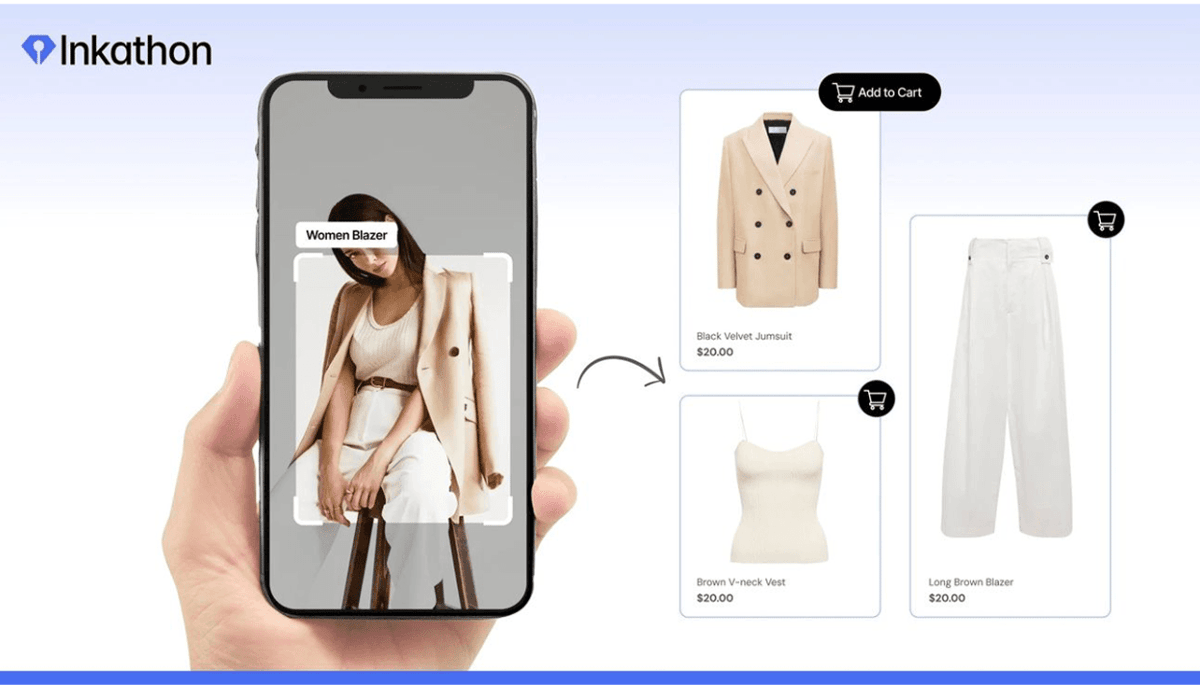 Image Source: GemPages
"Generative models allow machines to learn from data and then create new,original content, and they have the potential to revolutionize industries from music to fashion to gaming." — Yann LeCun, Director of AI Research at Facebook.
A quiet transformation is happening behind those familiar search results that could change how fashion brands connect with their customers. Advanced AI algorithms now reshape every part of online product discovery. This creates unique opportunities and potential risks for fashion retailers.
How search engines are evolving with artificial intelligence
Search engines now use sophisticated AI that goes way beyond the reach and influence of simple keyword matching. These algorithms analyze millions of social media posts, sales data, and search trends daily to spot emerging fashion priorities and consumer behaviors. AI-powered search engines also make results by a lot more accurate and help find products quickly through visual search and natural language processing [2].
Fashion retailers now see search algorithms that understand style priorities, seasonal trends, and product attributes with amazing precision. The potential effect looks substantial — generative AI alone could add between $150 billion and $275 billion to the apparel, fashion, and luxury sectors' operating profits within the next five years [3].
The rise of visual search in fashion retail
Visual search technology has changed the way consumers find fashion products. Shoppers no longer need to describe garments with text. They can upload images or use their smartphone's camera to find similar items [4].
Big retailers have noticed this move — ASOS added its Style Match feature that lets customers shop directly from images they've captured [5]. This technology spots specific elements within fashion images, like neckline styles, sleeve cuts, and fabric patterns. It creates a continuous connection from inspiration to purchase.
The numbers tell the story: visual search could boost online retail revenue by as much as 30% by 2025. This technology also makes shopping easier if you have disabilities by offering a more user-friendly experience [5].
Voice search and its effect on fashion keywords
Over 27% of global online searches happen through voice commands [7]. This number could reach 50% by 2025 [7], which will change how consumers interact with search engines.
Voice searches sound more like natural conversations and run longer than typed queries. People don't just search for "black leather boots" anymore. They ask "Find stylish black leather boots near me" [7]. Fashion retailers must now optimize their content for natural language patterns and question-based keywords.
Location plays a big role in voice searches, with "Find women's boutiques near me" being a common search [7]. Fashion brands with physical stores need local SEO strategies to capture this growing search traffic.
Update: From optimising for search to optimising for answers
Visual and voice search changed how a query gets entered. What changed since is what comes back.
For a growing share of shoppers the result is no longer a list of links. It is a single generated answer produced by ChatGPT, Perplexity, Google AI Overviews, Claude, Gemini or Grok, and 22% of generative AI users already use these tools to research brands and products they intend to buy. LLM referral traffic in fashion and sport grew roughly twentyfold year on year through 2025.
The discipline addressing this has two names in circulation. Answer Engine Optimisation emphasises being the source the model quotes. Generative Engine Optimisation emphasises shaping the generated response across every surface where an AI now writes the verdict on a brand. In practice they describe the same work.
Here is what makes it different from the SEO this article was originally about. Ranking is no longer the qualifying round. Only 38% of pages cited in AI Overviews appear in Google's top ten organic results. A retailer can hold position three and still be absent from the answer above it.
Why Fashion Retailers Are Uniquely Vulnerable to AI Disruption
Fashion retailers deal with unique challenges that make them vulnerable to AI-driven search disruptions. These brands must deal with complex obstacles as artificial intelligence exposes and intensifies their problems.
Content volume challenges in fashion catalogs
Fashion catalogs' massive size creates an overwhelming burden to manage. Product tagging by hand takes about 25 minutes for each SKU. New products take 20-30 days to show up online. This delay puts retailers at a competitive disadvantage because AI-powered search engines now favor fresh, updated content. Large catalogs become harder to maintain for SEO relevance. AI search engines expect accurate product details across all channels [9].
Seasonal inventory and SEO volatility
Inventory changes directly affect fashion retailers' SEO performance. New seasons bring fresh challenges to predict trends in a competitive retail scene [10]. Product relevance changes throughout the year and creates SEO volatility. Weather adds more complexity - a sudden cold snap can spark demand for warm clothing. An unusually warm fall might delay winter clothing sales [11]. These patterns confuse traditional SEO methods, while seo ai tools can predict and adapt to these changes.
The personalization expectation gap
Modern shoppers have raised their standards for tailored experiences:
- They share personal data but expect an exceptional shopping experience in return [12]
- They want instant service and personalization at every step [12]
- They spot generic recommendations right away
This gap causes real problems since 35% of e-commerce traffic comes from organic search. Retailers without artificial intelligence in SEO strategies struggle to provide the tailored experiences shoppers want. The McKinsey Global Fashion Index shows the top 20% of fashion businesses generated 144% of the industry's profits [12]. This proves how AI and SEO capabilities create a growing competitive gap.
The Real Cost of Ignoring AI in Your SEO Strategy
 Image Source: MicroSourcing
"The reality is that being unprepared is a choice. The benefits come when we see AI as a tool, not a terror, and bring it into our sales motions." — Anita Nielsen, President, LDK Advisory Services.
The financial effects of skipping seo ai strategies go way beyond just being visible online — they hit your profits hard. Your business loses money when you don't use artificial intelligence in SEO, and these losses keep adding up.
Declining organic visibility metrics
When you stop doing SEO, your organic visibility takes a nosedive. Take this real example: a retailer managed to keep their performance up after stopping SEO and even hit their best traffic numbers. In spite of that, their daily clicks dropped from 250 to just 90 within a year [13]. This happens because Google keeps checking websites using many ranking factors. Not having fresh content and technical updates sends the wrong signals to search algorithms [13]. Your competitors build their online presence while you're inactive, which makes it harder to catch up [13].
Rising customer acquisition costs
Fashion and accessories brands pay about USD 129.00 to get one customer [14]. Without artificial intelligence in seo, this cost goes up because you end up relying on paid traffic. Here's what this means for your money:
- Your Customer Lifetime Value (CLTV) should be 3 times your Customer Acquisition Cost (CAC) [14]
- High CAC plus fashion's slim margins puts your profits at risk
- Paid ads cost nowhere near what you'd spend on organic strategies [13]
Seo ai tools can cut your acquisition costs by boosting organic rankings and helping you spend marketing dollars better. But companies that ignore these tools struggle with CAC that keeps going up.
Case study: Fashion brands that disappeared from search results
The speed at which some 10-year-old fashion retailers have disappeared from search is eye-opening. Across the industry, new "challenger" brands — free from old ideas about products and customers — are taking market share, especially in sportswear [16]. Look at Shein's quick rise to show how AI and SEO create advantages — they test thousands of small-batch products daily to get data and jump on trends faster [17]. Traditional retailers without these tools become invisible to potential customers, even after building their brands for decades.
What the answer layer actually costs you
There is a second cost that sits underneath the acquisition numbers above, and Measmerize's own research found it by reading what customers say rather than what brands publish.
Across 60,000 reviews from 60 fashion and luxury brands, Size and Fit is the single largest topic at 30% of all reviews and runs 60% negative. In apparel alone it reaches 45%. Quality and Construction comes second at 25%, also 60% negative. Style and Design is the bright spot, positive in 83% of reviews industry-wide.
That matters because the engines are reading those reviews. During the 2025 holiday cycle, 96% of fashion citations on Gemini went to non-retailer sources. Models over-index user-generated content, editorial and forums, because those sources carry less risk of repeating a brand's own marketing back at the user.
So the cost of ignoring this change is not only a ranking you lose. It is an answer, written by something you do not control, describing your sizing as unreliable to a shopper who never reaches your site.
Building an AI-Ready SEO Foundation for Fashion Retail
A methodical approach to structure, tools, and organization will prepare your fashion retail site for AI-driven search. Your success in this digital world depends on how fast you adapt your SEO foundation:
Content structure assessment and cleanup
Your current content structure needs assessment for AI readiness. A well-laid-out fashion site substantially affects both search visibility and user experience - poorly designed retail sites sell only half as much as better-organized ones [18]. Product pages need auditing for consistent formatting, clear hierarchies, and structured data implementation. AI search engines give priority to sites with clean code and organized information that algorithms understand easily [19].
Selecting the best SEO AI tools for fashion websites
Your specific needs determine the right SEO AI tools. Fashion retailers should look for these key features:
- Automated product tagging - cuts manual tagging time from 25 minutes per SKU to minutes or seconds [20]
- Content optimization - your product descriptions match search intent
- Visual search enhancement - products become easier to find through image recognition
Research shows 68% of companies get higher seo artificial intelligence ROI with proper tool implementation [3]. The right seo ai tool should blend with your existing systems and scale as your product catalog grows.
Creating an AI-friendly product taxonomy
Product taxonomy — the systematic categorization of your fashion items — forms the foundation of artificial intelligence in seo success. A well-laid-out taxonomy needs logical categories, standardized naming conventions, and consistent attributes [4]. Better product category classification can boost sales by 35% and reduce cart abandonment by 20% [4].
Fashion retailers' taxonomy should detail attributes like style, color, pattern, material, occasion, and seasonality. This level of detail helps ai and seo systems understand your products better and ended up improving visibility in text and visual searches across all sales channels.
Two signals that get a fashion brand cited
These two signals decide whether an engine names you.
Off-site credibility, weighted differently by engine. ChatGPT and Claude lean on editorial such as Vogue and Business of Fashion. Gemini and Perplexity weight visual platforms including YouTube and Pinterest. Grok skews social. Reddit appears in the top five citation sources for all five major engines, and Wikipedia acts as a bridge node across the editorial-leaning models. Most fashion social teams are resourced for Instagram and TikTok, which is not where the citations are.
Rendering, which most teams never check. Server-rendered HTML matters more than expected, because crawlers may skip content that only appears after JavaScript runs. A page that renders its body client-side can look complete to a human and empty to the engine reading it.
A 90-day starting point
Days 1 to 30, find out where you stand.
Ask all five major engines the questions your customers ask: is this brand true to size, how is the quality, what are returns like. Record the answers and every source cited. Then pull your own reviews from the platforms those engines quote and sort them by topic the way the study does. You now have a baseline and a ranked problem list.
Days 31 to 60, fix rendering and structure.
Confirm your key pages serve their content in the initial HTML rather than after JavaScript runs. Rewrite headings into the questions people actually ask, with a direct answer in the first two sentences beneath each.
Days 61 to 90, attack the largest negative topic at source. For most apparel retailers that is fit, and the intervention is a product decision rather than a content programme. Start with how Measmerize AI sizing works, then integrate AI sizing on your store.
Re-run the day 1 audit each quarter. Citation share is the metric that tells you whether any of it worked.
The Measmerize Advantage: Solving the Fit Signal Problem
If you own organic performance for a fashion retailer, the hardest thing about answer engines is that the deciding evidence is not on your site. It is in reviews, forums and editorial. 96% of fashion citations on Gemini during the most recent holiday cycle went to non-retailer sources.
Content programs cannot reach that layer directly. The one input you control is what customers experience, and the loudest thing they talk about is fit, at 30% of all reviews and 60% negative. Most Size Advisors reduce bad size decisions eventually. Approaches built on accumulated purchase history need a large and stable catalog and years of history per SKU first, which a seasonal assortment never gives them. Measmerize starts from the garment instead: the Digital Twin is compared against the theoretic body that fits perfectly in that size of that garment, so the first recommendation is already accurate.
Lead the case with conversion. Shoppers who engage with the tool convert at 3 to 9 times the rate of those who do not, and average order value runs around 10% higher. Returns follow: size-challenged shoppers who follow the recommendation return 40% fewer items for size and fit reasons than shoppers who do not, a difference between two groups of shoppers rather than a change in your overall return rate. Fewer bad size decisions means fewer negative fit reviews entering the layer the engines read.
Four questions separate vendors quickly.
- How does your system work when a product has zero purchase history?
- What product data do you use, and how? Any vendor claiming a Digital Twin approach while saying a generic gender-level size chart is sufficient is not being consistent, because every garment fits differently across suppliers and fabrics.
- What exactly is your KPI based on?
- And how does your tool behave when a shopper declines cookie consent?
Conclusion
Fashion retailers face a turning point as AI reshapes product search. Many brands think their digital presence works well for customers. The reality looks quite different. AI has changed how shoppers find and connect with fashion products online.
Fashion retailers must adapt to this new reality quickly. Companies that build AI-ready foundations now will lead the pack. They need structured content, smart tools, and well-laid-out taxonomies. Brands still using old SEO methods risk falling behind as search gets smarter and customer expectations grow.
Making surface changes won't cut it. Fashion brands have unique challenges to tackle. Their product catalogs are huge. Seasons change fast. Customers want personalized experiences. These problems become easier to handle with the right AI tools and planning.
Smart retailers see AI-powered SEO as both a challenge and a chance to grow. Forward-thinking brands don't see it as a threat. They welcome these tools because they help build stronger customer relationships in today's digital world of fashion.
Frequently asked questions
-
What is AI SEO for fashion ecommerce? It now covers two related jobs. The first is classic search optimisation improved by AI tooling, including automated product tagging, taxonomy work and visual search readiness. The second, newer job is Answer Engine Optimisation: earning a place inside the answer a generative engine produces, which depends far more on off-site credibility than on on-page work.
-
How does Google's AI Overview affect fashion brand traffic? It decouples ranking from visibility. Only 38% of pages cited in AI Overviews appear in Google's top ten organic results, so a strong organic position no longer guarantees inclusion in the answer sitting above it. Plan for fewer sessions carrying higher intent.
-
What types of content rank in generative search for fashion? Editorial coverage, user-generated content and forum discussion carry disproportionate weight, because models over-index sources that are not the brand talking about itself. Reddit appears in the top five citation sources for all five major engines. Brand-owned content still matters, as supporting evidence rather than the deciding source.
-
Does product structured data help fashion brands in AI search? Yes, schema sharpens your brand entity signals and helps engines resolve what your products are, and server-rendered HTML matters more than most teams expect because crawlers may skip JavaScript-only content. Neither will make an engine recommend a retailer whose reviews say the sizing is unreliable.
-
How long does it take to see results from AEO for fashion? Technical fixes such as rendering and schema can register within weeks. Citation share moves on the timescale of the underlying evidence changing, which means quarters rather than weeks, because it depends on the volume and sentiment of what third parties are saying about you. Treat it as a quarterly-measured program.
References
- [2] - https://www.leewayhertz.com/ai-use-cases-in-fashion/
- [3] - https://www.semrush.com/content-hub/content-marketing-blog/ai-seo-tools/
- [4] - https://www.linkedin.com/pulse/product-taxonomy-fashion-ecommerce-why-matters-okkular-io-ghlkc
- [5] - https://miros.ai/top-5-benefits-of-visual-search-in-fashion/
- [7] - https://nyweekly.com/business/how-to-optimize-fashion-ecommerce-store-for-voice-search/
- [9] - https://susodigital.com/thoughts/impact-of-ai-on-ecommerce-seo
- [10] - https://www.brightpearl.com/ecommerce-guides/fashion-inventory-optimization
- [11] - https://www.efulfillmentservice.com/2024/07/master-seasonality-in-apparel-ecommerce-like-a-pro/
- [12] - https://www.bloomreach.com/en/blog/impact-artificial-intelligence-online-fashion-retail
- [13] - https://nexusmarketing.com/risks-of-stopping-seo/
- [14] - https://www.wearedivisa.com/digital-marketing/a-comprehensive-guide-to-customer-acquisition-cost-in-the-fashion-apparel-industry/
- [16] - https://www.mckinsey.com/industries/retail/our-insights/state-of-fashion
- [17] - https://www.wearemediavision.com/industry-report/2023-organic-search-demand-report-fashion/
- [18] - https://www.pixyle.ai/blog/what-is-taxonomy-and-how-to-leverage-it-in-ecommerce
- [19] - https://infotrust.com/articles/optimize-site-content-for-ai-search-results/
- [20] - https://www.vue.ai/blog/ai-in-retail/catalog-tagging-fashion-retailers/