Filippo Calenti on Storytime: Wrong Sizes, Returns and Virtual Try On
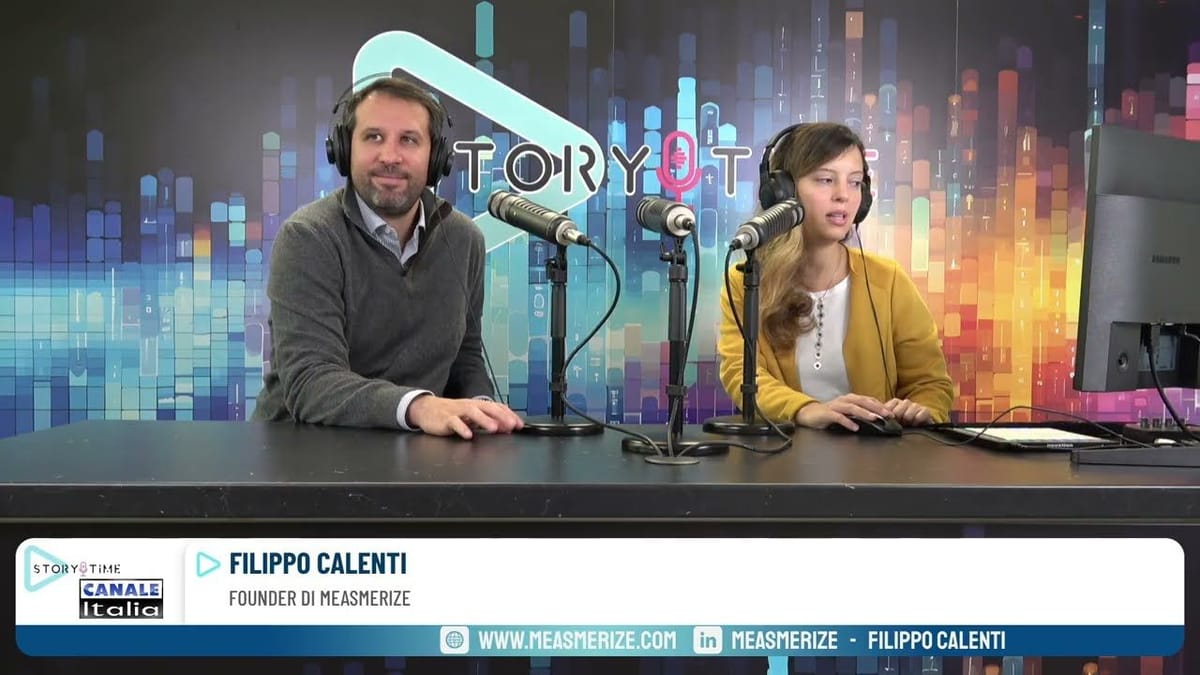 Watch the full interview on YouTube (in Italian, with English subtitles)
Our CEO and founder, Filippo Calenti, joined Storytime on Radio Canale Italia to talk about one of the costliest problems in online fashion: shoppers who don't know which size to buy. The interview is in Italian, with English subtitles. Quotes below are translated from Italian.
Why do wrong sizes cost fashion brands so much?
Wrong sizes cost fashion brands twice: in sales lost to shoppers who aren't sure of their size, and in the ecommerce returns that follow. The first line is an opportunity cost of missed revenue. "Even after Covid, 60% of consumers say they never buy online from a brand when they don't know their size there," Filippo said.
He also pointed to a study published in April 2026 by Business of Fashion and Amazon. It surveyed 10,000 consumers in the UK, Germany, France, Italy and Spain, and 44% named finding the right size as their top problem when buying fashion online.
The second line is cost. Every size-related return means shipping both ways, checking and reconditioning the item, and often selling it at a discount. Brands can't drop free returns either: without them, shoppers don't buy. For Filippo, reducing returns in ecommerce starts before the order, by getting the size right on the product page.
How does the AI Size Advisor work?
The AI Size Advisor is Measmerize's size recommendation tool. It asks shoppers a few questions, such as height, weight and age, with no tape measure and no photos. From the answers it builds a Digital Twin, an estimated 3D model of the shopper's body, and compares it with the garment's own measurements. Each brand gets its own model, which keeps learning from its sales and returns.
Among shoppers who follow a Measmerize recommendation, size and fit returns are 40% lower than among those who don't (source).
Shoppers choose sizes in different ways, so we built more tools around it. The Smart Size Chart serves shoppers who prefer to measure themselves, and we manage and automate size charts for brands using the same data. The Body Scanner adds an optional scan from two phone photos.
How is a size-aware virtual try on different?
A size-aware virtual try on starts from the shopper's size, so it shows how clothes fit as well as how they look. Measmerize's Virtual Try On launches for clothing in late October 2026. It shows the garment on the shopper's avatar in the recommended size and the sizes either side, so they can see how the fit changes from one size to the next. Filippo explained that it needs only a selfie: the body comes from the same Digital Twin behind the AI Size Advisor, and generative AI rebuilds the garment on it.
Filippo pointed out that many try-on tools make any garment look perfect, even in a size the shopper could never wear. "We actually start from physics," Filippo said. "We work out how that person really fits into that size, and we show you what happens if you play with the sizes either side." A footwear version follows by the first quarter of 2027.
Will AI shopping assistants replace the product page?
Filippo sees the market polarizing in two directions. One is "no-click shopping", also called agentic commerce: a shopper asks an AI shopping assistant such as ChatGPT or Gemini for a pair of jeans and buys inside the chat, cutting the brand out of the journey. We looked at what Google's AI shopping agents mean for fashion stores in an earlier post. The other direction is a richer product page: generative AI now makes experiences affordable that, in his words, "would have cost 100x to build ten months ago".
Measmerize is betting on the product page. Human shoppers still make up well over 95% of the traffic reaching a brand's product pages, he said, and fashion depends on context and personal taste that chatbots will struggle to learn. As Filippo put it: "Buying fashion isn't a utilitarian experience, it's a pleasure."
Frequently asked questions
Does virtual try-on technology actually reduce returns?
Only if it shows the real fit. Many try-on tools render any garment perfectly, whatever the size, so they can't warn a shopper about a size that won't fit. Measmerize's Virtual Try On starts from the AI Size Advisor's recommendation and shows the sizes either side. It launches in late October 2026, so there are no published results yet.
Can you virtually try on clothes before buying?
Yes. With Measmerize's Virtual Try On, the shopper takes a selfie on the product page and sees the garment on an avatar built from their Digital Twin, in the recommended size and the sizes either side. It works on mobile, with no augmented reality and no full-body photos.
How can fashion brands reduce returns in ecommerce?
Start with size. In a 2026 Business of Fashion and Amazon survey of 10,000 European consumers, 44% named finding the right size as their top problem when buying fashion online. A size recommendation on the product page helps: among shoppers who follow Measmerize's recommendation, size and fit returns are 40% lower than among those who don't.
What is agentic commerce in fashion?
Agentic commerce, or no-click shopping, is when an AI assistant such as ChatGPT or Gemini searches, compares and buys on the shopper's behalf. Filippo expects it to take over utilitarian purchases like washing machines, but thinks fashion depends on context and taste that chatbots will struggle to learn. For how brands can show up in AI answers today, see our AEO and GEO playbook for fashion.
About Filippo Calenti
Filippo Calenti is the founder and CEO of Measmerize. Before founding it, he spent seven years at Boston Consulting Group, much of it in fashion and luxury, then joined Richemont's Montblanc as Chief of Staff to the CEO.
Chapters
- 00:00 Introduction
- 01:00 From BCG and Richemont to founding Measmerize
- 02:11 Why returns and wrong sizes cost brands
- 04:04 How the AI Size Advisor and Digital Twin work
- 05:47 Virtual Try On: seeing how fit changes between sizes
- 07:46 AI, ChatGPT and no-click shopping: the future of online fashion
- 10:34 What's next: Virtual Try On and footwear
- 11:12 Where to find Measmerize
Thanks to Storytime and Radio Canale Italia for having us. The full interview is also on our YouTube channel.
Full interview transcript
Recorded on 19 October 2026 and translated from Italian.
Host: Storytime, Evoluzione Radio. Welcome back, friends of Storytime: today I'm joined by Filippo Calenti. Hi Filippo.
Filippo Calenti: Hi, nice to meet you.
Host: Hi. Welcome back, how are you?
Filippo Calenti: Very well, thanks.
Host: Great. Good, thank you. Filippo, we're ready to get into Measmerize, right?
Filippo Calenti: That's right, yes.
Host: Today we're looking at a real problem with shopping online: you see a photo, it's beautiful, it looks great on the model. Then I put it on, and damn, it doesn't fit, it doesn't fit the way I thought, maybe the size doesn't match my body. And this is where we get into what you set out to solve. So first, tell us a bit about yourself.
Filippo Calenti: Yes, well, I started out quite far from these ideas: I spent many years in the corporate world. I spent seven years at Boston Consulting Group, where I worked a lot in fashion and luxury. Then I went to work at Richemont, at Montblanc, as Chief of Staff to the CEO.
But already at BCG it was obviously a huge problem for the industry: we'll get to it, it costs brands a lot. So I had this question at the back of my mind, and I had looked at ways to solve it. Then in 2018 I was always traveling with Richemont, with Montblanc, and my father was terminally ill with cancer.
I decided to take some time off to be with him. And after that, with some free time, I picked the project back up, and it took off from there: we're coming up on almost ten years.
Host: Well, that's a small aside: even in the rush of a job or a career, when important values are at stake, it's right to take the time. Closing that aside, let's get back to today's topic, which you already hinted at: it's a problem for brands. Why is it a problem for brands?
Filippo Calenti: Well, on the shopper side the problem is very intuitive: I think everyone at home has run into it. And because it's so intuitive, so obvious, so widespread, it has a big impact on the P&L of anyone selling online. It hits two lines of the P&L.
Let's start with revenue: even after Covid, 60% of shoppers say "online, I never buy from a brand when I don't know my size there". So if you can win even a very small share of this huge group of shoppers and give them confidence they're buying the right size, the impact on sales is significant.
By the way, in April Amazon and Business of Fashion published a study: they surveyed 10,000 consumers to find the biggest obstacles and barriers to buying. And although so many companies are focusing on AI and the new AI trends, 44% of respondents named size as the number one reason. Online, it's still the biggest barrier, so on the sales side it's a huge brake.
On the cost side there's the more intuitive cost, right? Handling returns: shipping back and forth, reconditioning, and so on. Which the company always pays for. If you don't offer free returns nobody buys online, so you have to offer free returns, knowing you have to carry this huge cost.
Host: So those are the problems, and that brings me to the obvious question. So how does Measmerize come into this? What's the change?
Filippo Calenti: Yes, well, we started with the idea of recommending the size, in the most intuitive and easiest way, to the shopper who doesn't know their size. So we started with the idea of a size advisor: we ask you a couple of questions, you don't have to measure yourself or take photos, and we give you an accurate recommendation. Behind the scenes we estimate your measurements: we build what we call a Digital Twin, a digital avatar of your body.
And we compare those measurements with the garment's measurements to recommend your size. That's the first product, and it's still the main one, the one brands ask for most. But over the years we realized that shoppers, like everything in life, aren't monolithic: everyone has different preferences when choosing a size.
So what we've done is build a suite of products. Starting with managing size charts for brands, which is very, very complex for a retailer to do operationally: we can automate it with the same data that powers the size advisor. We've introduced a Body Scanner, so you can take two photos with your phone, without having to do a body scan.
Host: We'll go deeper on that later, but go on.
Filippo Calenti: No, all the way up to Virtual Try On, which we launch next week. It lets you not only know your size, but also see how that size fits on your body, and play with sizes to see how they look.
Host: Right, and that's exactly the detail I wanted to explore. It reminds me of something similar: people tried it for haircuts or hair color, your face stays the same and the hairstyles change, again using artificial intelligence. Is it more or less the same thing, applied to size?
Filippo Calenti: Conceptually yes, operationally very different. Many categories have managed to digitize the product on a device or with augmented reality. Apart from haircuts, where the analogy is almost a version of the old Snapchat filter, glasses, bags and shoes are more rigid products where it's already been done.
Clothing has the huge complexity of texture, material, drape and pattern, so it's much harder to render faithfully. So we've built something you see on your device, on mobile, without augmented reality and without taking full-body photos. It's very simple to use: you just take a selfie.
Using the same technology we use for the size advisor, the Digital Twin, we create your body, and with generative AI we rebuild the garment on your body completely faithfully. Not just to see any garment looking perfect: with many of these tools, if I try on a dress for a ten-year-old girl, it looks perfect on me, even though there's no size I could get even one leg into. We actually start from physics, so to speak, so we work out how that person really fits into that size, and we show you what happens if you play with the sizes either side.
Host: So I'd say this is a great way to start solving this problem of returns. But let me ask you: what are the main innovations changing the relationship between shoppers and brands, and are there opportunities opening up for fashion?
Filippo Calenti: Well, as with everything in AI, it's a time of huge change. Obviously it changes how companies work, but let's focus on the shopper experience, which is closer to what we do. It's a moment of polarization.
You have lots of technologies, generative AI of course, that let you do what we do, for example, which ten months ago would have cost 100x to build. Today generative AI lets you, for example, offer a much more immersive experience on the product page. Once I've browsed from the home page, picked my products, browsed them, chosen one and landed on the product page, lots of technologies let me experience it in a much more interactive way.
On the other side, though, there's what's called no-click shopping. Basically, instead of going to zara.com, or Nike, or Brand X, I go to ChatGPT and ask: "I'm looking for a pair of jeans." ChatGPT suggests some options and I buy directly through ChatGPT.
We're definitely not there yet, and ChatGPT, like Gemini, is just an example. But there's a lot of attention on a world moving in this direction, which means brands get completely disintermediated. So right now everyone is trying to place their bets and work out where the world is going.
Do I focus more on no-click, make my catalog readable to ChatGPT and try to get integrated into checkout? Or do I invest in my product page, in the shoppers who are still well over 95% of the traffic reaching it, and give them better experiences? We're betting a bit more on this second world.
I'm sure washing machines will move to ChatGPT, but in fashion there's a question of context. I think these chatbots will struggle to know us well enough to recommend based on our taste. And then there's the shopper themselves: buying fashion isn't a utilitarian experience, it's a pleasure.
Host: Absolutely. Filippo, I'd say you've been extremely thorough. You said this technology is coming out soon, so I'd say that's your next immediate goal. Do you have any others for the longer term?
Filippo Calenti: Well, this was a big piece of work, six months of work, and it's the first big innovation, arriving next week. This one is focused on clothing: by Q1 next year we'll launch the footwear version. And then, in terms of major products, those are it for the short term: next we'll refocus on the core products and make sure they work with the new features.
Host: So: measmerize.com is the website, and you also have LinkedIn pages under the same name, Measmerize's, and Filippo Calenti is your personal one. Well, Filippo, it's been a pleasure, thank you so much for introducing us to the future. What can I say, let's really hope there'll be fewer returns.
Filippo Calenti: Thank you, greetings to you and to everyone.
Host: Good luck.
Filippo Calenti: Bye.