Fix the Size Data Before the AI: What the BoF and Amazon Study Means for Fashion Ecommerce
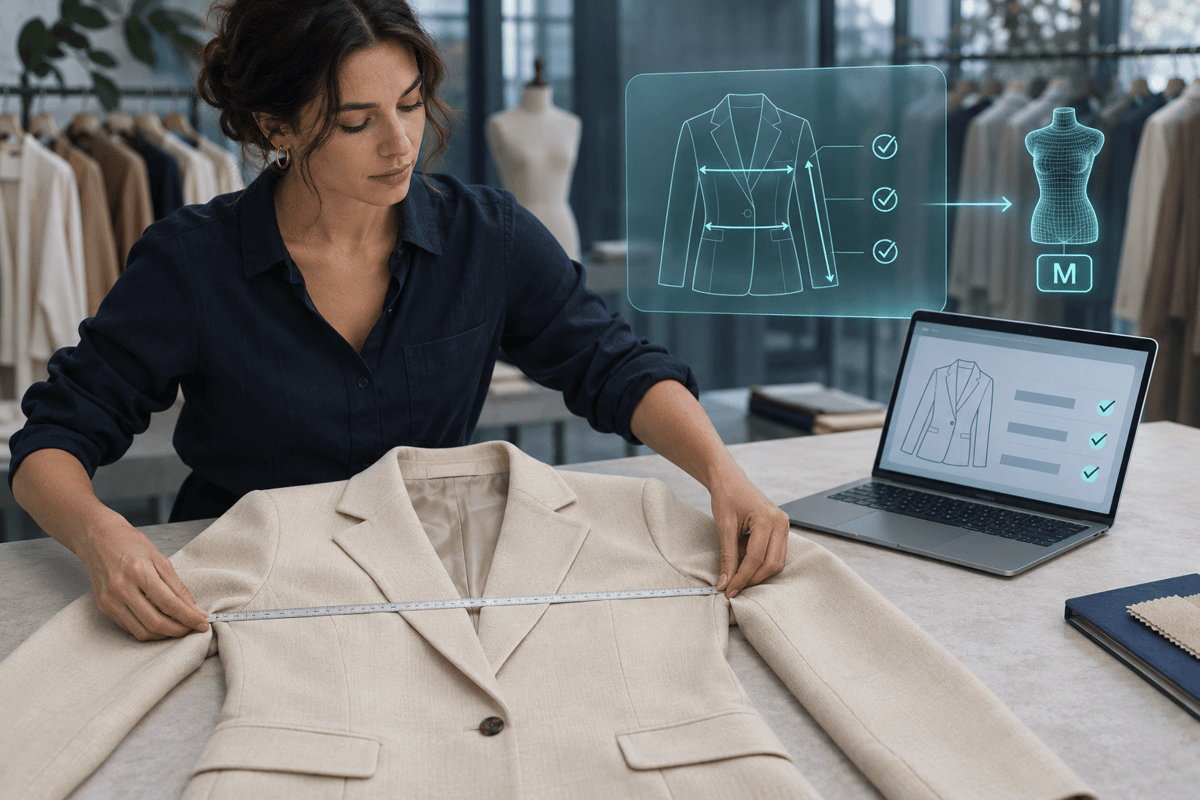 Image Source: AI
If you are setting next year's ecommerce budget for a fashion or footwear retailer, you might want to pay attention to two numbers from the newest large study of online fashion shoppers. Business of Fashion recently published their insights with Amazon in the Inside Fashion & Sports E-Commerce report, and two statistics are worth spending time on:
44% of fashion shoppers in the UK, Germany, France, Italy and Spain name finding the right size or fit as their top pain point online. This is about 11 percentage points ahead of the next pain point.
Only 19% of brand and retail leaders rank fixing foundational product data as their top ecommerce priority, while 54% put UX and brand expression first.
The writing on the wall is simple: ecommerce personalization in fashion, sizing included, is only as accurate as the product data it reads. Let’s unpack that in detail.
Fit Is the Top Barrier to Online Conversion
Fashion shoppers ranked difficulty finding the right size or fit (44%) above unclear product descriptions or materials (33%), Sports shoppers put size first too, at 36%.
Sizing costs a retailer twice. Returns are the cost finance already counts, but lost sales due to size uncertainty are the ones that never get reported on. At Measmerize, we already know that 52% of shoppers hesitate to complete a purchase when unsure about fit, and the unit gross margin lost on a failed sale is usually larger than the cost of a return.
At a $100 order and 50% gross margin, one lost sale costs $50 in profit, against $20-$30 to process a return.
Why Leaders Fund AI and UX Before Product Data
The budget split is easy to understand. UX and AI budget spends are easy to enumerate, since the investments are visible and launchable. Product data work is mostly done across multiple departments behind the scenes, so it does not get the spotlight in comparison.
But brands are taking note of putting the legwork for getting product data in order.
As per the BoF report, Swiss outdoor brand Mammut is holding off on AI-driven recommendations and virtual try-on until its foundations are solid.
Personalization Runs on Good Data
A sizing tool is only as good as the garment data underneath it.
Measmerize's Digital Twin approach asks the shopper for gender, age, weight, height and, for womenswear, bra size, and builds an estimated 3D model of their body. That model is compared with the measurements of the product being viewed, so the first recommendation is accurate from a product's first day online.
The trade-off is that the retailer must supply some garment data. We talk about it in detail in our Shopify Academy piece on why product data beats big data in apparel sizing.
What Fixing Data Means in Practice
Most of the data needs sit with teams you already have. The size data a recommendation needs comes down to four things (we don’t need them all):
-
Garment measurements or anthropometric measurements for each product, with each measurement defined the same way across the catalog
-
Fabric, stretch and intended fit (fitted, regular, oversized) held as attributes
-
Model height and the size the model is wearing
-
Size data stored as structured product data, not only as an image or inside a widget
The structured-data point matters more in 2026 than before,with Shopify now sharing store catalogs with AI shopping channels by default.
Ownership is the harder problem to solve with typically four owners for this data set:
- Product measurements sit with production and the tech pack
- Anthropometric measurements behind the sizing sit with pattern-making
- Size chart sits with ecommerce
- Assortment decision sits with merchandising
This is where Measmerize's onboarding does the work. Measmerize runs the Size Advisor, the Body Scanner,the Smart Size Chart and Virtual Try On from one integration and one source of data, and onboarding builds that data layer of product and body measurements, filling the gaps it finds.
On Enterprise, Measmerize runs a thorough onboarding assessment that includes physical try-ons. On the Shopify app, automated checks verify the quality of inputs at upload.
Shoppers Don't Trust AI Sizing Yet, So Earn It
Only 11% of shoppers in the BoF survey say they trust AI for size guidance, and 8% for virtual try-on. Among luxury shoppers, trust in AI size guidance reaches 20%.
Part of the gap is history. Size Advisors have been on the market since the early 2010s, and many vendors take the size data at face value, even when it is incomplete or wrong. Trust returns when a recommendation is visibly built on the garment's measurements, is accurate on day one, and is measured honestly.
The Measmerize Advantage: Solving the Product Data Problem Behind AI Sizing
Most AI sizing tools inherit whatever size data the retailer has and learn around its errors through returns.
Measmerize treats the data as part of the product. Onboarding checks and corrects the measurements, and the same data layer then serves every experience on the page: the Smart Size Guide, the Size Advisor using the Digital Twin approach with an optional Body Scanner, and Virtual Try On paired with the Size Advisor (our Virtual Dressing Room).
Measmerize needs garment data to start, and onboarding is how it fills the data gaps for what’s missing.
Shopify retailers can install Measmerize on Shopify and run a 14-day trial. Enterprise retailers can book a demo and have Measmerize score their size data first.
FAQ
Should we fix product data before investing in AI personalization?
Fix the size and fit data that AI reads first, and run a small pilot alongside it. An AI sizing tool cannot be more accurate than the garment data underneath it. Measmerize helps retailers fix that data during onboarding, fully on its Enterprise solution and through automated checks on Shopify.
What product data does AI size recommendation need?
AI Size recommendation tools need garment or anthropometric measurements for each product, or families of products, defined consistently, plus fabric and intended fit. Model height and size worn by the model help shoppers too. Measmerize starts from these measurements, then uses sales and returns data to refine the recommendation over time.
How is fit personalization different from product recommendations?
Product recommendations decide which items to show a shopper. Fit personalization tells the shopper which size of a chosen item fits their body. Measmerize does the second well by comparing a Digital Twin of the shopper, built from a short questionnaire, with the product's measurements.
How do brands fix size data without a long project?
Start with the products that get the most traffic. On Shopify, upload the size charts you already have to Measmerize and use the calibration step to check the recommendations. On Enterprise, Measmerize checks and scores every SKU and arranges physical try-ons where the data looks wrong.